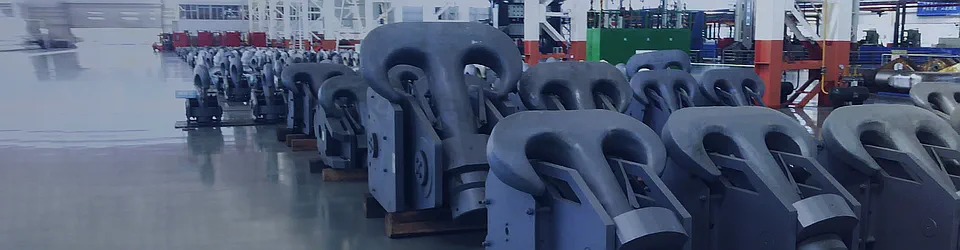
Forged ramshorn hooks, commonly referred to as double lifting hooks, are high-capacity, symmetrically structured lifting components manufactured through professional closed-die forging processes. Differing greatly from single hooks and ordinary welded lifting parts, ramshorn hooks feature a dual-curve integrated structure, delivering superior load uniformity, structural stability and fatigue resistance. Strictly produced in compliance with DIN 15402, EN 13001 and EN 1677 international standards, they are widely recognized as the core load-bearing parts for heavy-duty industrial lifting equipment.
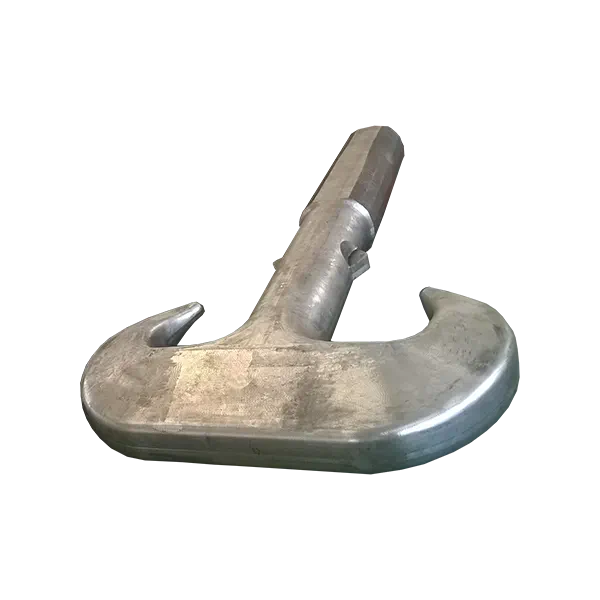
1. Core Structural and Performance Advantages
The primary superiority of forged ramshorn hooks stems from their one-piece integral forging design. Fabricated from premium alloy steel such as 34CrNiMo or high-strength carbon structural steel, the entire hook body is formed from a single steel blank via heating, precise die forging, trimming and finishing. This integrated manufacturing method eliminates structural defects caused by welding, splicing or assembly, achieving a dense internal metal texture with no pores, inclusions or hidden cracks. After standardized quenching and tempering heat treatment, the finished hooks obtain balanced high tensile strength and impact toughness, effectively resisting permanent deformation and fracture under long-term heavy-load and frequent cyclic working conditions.
The symmetrical double-hook layout is another key advantage. It evenly distributes vertical and lateral lifting stress, greatly reducing local stress concentration compared with single hooks. This design minimizes load shaking and unbalanced force during operation, significantly improving lifting safety and stability. With a larger effective load-bearing area, ramshorn hooks are capable of bearing ultra-heavy loads ranging from 5 tons to 2000 tons, fully adapting to super-heavy industrial lifting demands that ordinary single hooks cannot meet.
2. Typical Industrial Applications and Use Cases
Forged ramshorn hooks are exclusively applied to medium and super-heavy lifting scenarios, serving as essential accessories for large overhead cranes, gantry cranes, port container cranes and metallurgical special cranes. In the steel industry, they are widely used for lifting heavy steel coils, large steel ingots and assembled steel structural components, adapting to high-temperature and high-intensity continuous operation environments. In shipbuilding and marine engineering, these hooks undertake the hoisting and positioning of oversized hull segments, marine equipment and offshore engineering modules, with stable performance suitable for humid and corrosive working conditions.
In infrastructure and construction engineering, ramshorn hooks are applied to the installation of large bridge prefabricated parts, tunnel mechanical equipment and heavy building steel structures. Meanwhile, they play an irreplaceable role in mining equipment handling, heavy machinery maintenance, logistics heavy cargo turnover and other scenarios. Thanks to their excellent stability and safety, they have become the preferred lifting component for all heavy-load working conditions that require high safety coefficients and long-term stable operation.
3. Strict Technical and Manufacturing Requirements
To ensure reliable performance in heavy-duty service, forged ramshorn hooks must comply with unified international technical specifications throughout production and inspection. In terms of raw materials, only qualified high-strength alloy steel blanks are allowed, with strict control over chemical composition and mechanical properties to guarantee overall material uniformity.
For manufacturing technology, all ramshorn hooks must adopt closed-die forging forming to ensure accurate overall dimensions and smooth streamline transition of the hook body, avoiding stress concentration at curved parts. Standard quenching and tempering heat treatment is mandatory to optimize internal grain structure and achieve qualified hardness and toughness indicators. Surface treatment adopts shot blasting for oxide scale removal, matched with hot-dip galvanizing or high-performance anti-corrosion spraying to enhance wear resistance and corrosion resistance.
In terms of quality inspection, every finished hook must undergo non-destructive testing, including magnetic particle testing (MT) for surface crack detection and ultrasonic testing (UT) for internal defect inspection. All products need to pass strict proof load tests and minimum breaking load tests to verify load-bearing performance. Only products that fully meet DIN 15402 and EN 13001 standard indicators can be delivered. In addition, each qualified hook is permanently marked with working load limit (WLL), batch number, standard code and manufacturer information for traceability and standardized use.
4. Conclusion
With integral forging craftsmanship, symmetrical stable structure, ultra-high load-bearing capacity and rigorous standard compliance, forged ramshorn hooks are specialized heavy-duty lifting components tailored for super-heavy industrial scenarios. Their reliable mechanical performance and long service life ensure high safety and high efficiency of industrial hoisting operations, making them an indispensable core part in modern heavy industry, port logistics and large-scale engineering construction fields.