In the world of heavy industry, construction, and material handling, few components bear as much responsibility for human safety as the humble lifting hook. When tons of steel hang suspended above a worksite, the integrity of that single forged steel hook becomes the difference between a routine operation and a catastrophic failure. Forged lifting hooks are not just pieces of metal — they are precision-engineered safety devices manufactured to exacting global standards. In this article, we explore why forged hooks are indispensable, the international standards that govern them, and the technical parameters that define their performance.
Why Forged Hooks Are Non-Negotiable for Safety
The Forging Advantage Over Casting
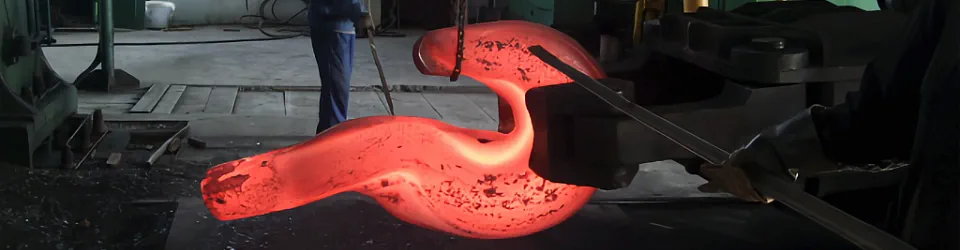
Not all hooks are created equal. Casting, the process of pouring molten metal into a mold, produces hooks with random internal grain structures and potential voids or inclusions. Forging, by contrast, shapes steel under extreme pressure (typically at temperatures between 1,000°C and 1,600°C), compressing and refining the grain flow to follow the hook’s contour. This continuous, aligned grain structure delivers:
- Superior fatigue resistance: Fatigue cracking is the dominant failure mode in lifting hooks. Forged grain structures resist crack initiation and propagation far better than cast alternatives.
- Higher tensile strength: The compressive forces of forging densify the material, eliminating porosity and increasing overall strength.
- Enhanced impact toughness: Forged steel absorbs shock loads without brittle fracture — a critical property when loads are suddenly applied or released.
For these reasons, casting is universally unacceptable for safety-critical crane hooks across all major regulatory frameworks.
The Stakes of Hook Failure
A failed lifting hook can result in dropped loads, equipment destruction, serious injury, or fatalities. The Occupational Safety and Health Administration (OSHA) and similar agencies worldwide classify hook failure as a “struck-by” hazard, one of the leading causes of construction fatalities. Regular inspection, proper load rating adherence, and compliance with manufacturing standards are therefore not just best practices — they are legal and moral imperatives.
Global Standards Governing Forged Lifting Hooks
The manufacturing, testing, and use of forged lifting hooks are regulated by a comprehensive network of international and regional standards. Here are the most influential:
1. ISO Standards (International)
The International Organization for Standardization (ISO) provides the most widely recognized global framework:
-
ISO 17440:2014 — Cranes — General design — Limit states and proof of competence of forged steel hooks. This is the foundational standard for crane hook design, covering material requirements, workmanship, manufacturing tolerances, heat treatment, proof loading, and hook body geometry. It defines limit states for yield, ultimate strength, fatigue, and brittle fracture.
-
ISO 7597:2013 — Specifies requirements for forged steel lifting hooks with latch, Grade 8, with eye or clevis and pin configurations up to 63 tonnes Working Load Limit (WLL). It governs hooks used in chain slings, wire rope slings, and textile slings.
-
ISO 2766 — Covers single lifting hooks with shank up to 25 tonnes capacity (Grades M, P, S, T, V), including both hammer and drop-forged hooks.
-
ISO 4779:2021 — Addresses stainless steel forged hooks for use in extreme temperature ranges (–100°C to +400°C) and corrosive environments.
2. European (EN) Standards
-
EN 13889 — Defines manufacturing and testing requirements for forged hooks, including materials, heat treatment processes, and non-destructive testing (NDT) protocols.
-
EN 13001-3-5 — Part of the general crane design specification, covering limit states and proof of competence for both forged and cast hooks. The 2025 revision includes updated hazard identification in Annex N, addressing yield, ultimate, fatigue, and brittle fracture risks across material temperature limits.
-
EN 1677 — Specifies Grade 8 and Grade 10 alloy steel components for chain slings, including forged hooks.
3. North American Standards
- ASME B30.10 — Published by the American Society of Mechanical Engineers, this standard is the dominant reference in North America and has broad global influence. It covers fabrication, attachment, use, inspection, and maintenance of hooks for load-handling purposes. It defines specific removal-from-service criteria, including hook opening deformation limits and wear thresholds.
4. Regional and National Standards
- DIN Standards (Germany): Widely adopted across European engineering sectors.
- GB/T Standards (China): National standards aligned with ISO frameworks, common in Asian manufacturing.
- FEM Standards (European Materials Handling Federation): Applied across the European crane and hoist industry.
Key Technical Specifications of Forged Lifting Hooks
Understanding the technical parameters of a forged hook is essential for proper selection, operation, and maintenance. Here are the critical metrics:
1. Working Load Limit (WLL)
The WLL is the maximum mass a hook is designed to lift under normal conditions. Forged crane hooks are available with WLLs ranging from 1 tonne to over 500 tonnes, depending on the application — from small workshop hoists to heavy-duty port and offshore cranes.
Safety reminder: The WLL is never an approximate figure. Exceeding it, even momentarily, can cause permanent plastic deformation or catastrophic failure.
2. Material Grade
Forged hooks are manufactured from high-tensile alloy steel (common grades include 35CrMo and similar chromium-molybdenum alloys). They are classified by strength grade:
- Grade M (4): Medium strength, general-purpose
- Grade P (5): Higher strength
- Grade S (6) / Grade T (8): High-strength alloy steel, the most common for industrial lifting
- Grade V (10): Very high strength, premium alloy steel for demanding applications
3. Safety Factor
All major standards require a minimum safety factor of ≥ 4 based on yield strength. This means the hook can withstand four times its rated working load before reaching the point of permanent plastic deformation. This margin accounts for dynamic loads, shock loading, wear over time, and unexpected operational variations.
4. Heat Treatment
After forging, hooks undergo precisely controlled quenching and tempering cycles:
- Quenching rapidly cools the steel to increase hardness and strength
- Tempering reheats it to a lower temperature to restore toughness and reduce brittleness
The result is a balanced combination of hardness, ductility, and fatigue resistance — essential for a component that must flex under load without cracking.
5. Hook Opening Deformation (Scrap Criterion)
Hook bodies are designed with deliberate ductility: they stretch open before they break, providing a visible warning of overload. Per ASME B30.10 and other standards, a hook must be removed from service when its opening exceeds the original dimension by 5% to 15%, depending on the specific standard and hook type.
6. Wear Limits
Wear at the load-bearing saddle (bowl) of the hook reduces effective cross-sectional area and increases stress concentration. Standards specify maximum allowable wear — typically 10% of the original section thickness — before the hook must be retired.
7. Non-Destructive Testing (NDT)
Quality forged hooks undergo rigorous NDT before leaving the factory:
- Magnetic particle inspection (MPI): Detects surface and near-surface cracks
- Ultrasonic examination: Verifies internal integrity, detecting subsurface inclusions or voids
- Hardness testing: Confirms proper heat treatment throughout the material
8. Temperature Range
Standard carbon-alloy forged hooks operate reliably within approximately –20°C to +200°C. For extreme environments, stainless steel hooks (per ISO 4779) extend the range to –100°C to +400°C while maintaining corrosion resistance.
9. Safety Latch Configurations
Modern forged hooks are typically equipped with spring-loaded safety latches (also called hook keepers) to prevent accidental load slippage. Options include:
- Standard spring-loaded latches
- Positive-locking latches for high-vibration environments
- Latchless designs for specific automated or specialty applications
Conclusion: Quality Is the Ultimate Safety Feature
Forged lifting hooks are a masterclass in why industrial components cannot be treated as commodities. Every aspect — from the grain structure forged at 1,500°C to the precision of the quenching cycle, from the WLL marking to the magnetic particle inspection — exists to protect lives and assets.
When selecting lifting hooks, always verify:
- Compliance with the standard relevant to your region (ISO, EN, ASME, DIN, or GB/T)
- Clear and legible WLL markings
- Valid material and heat treatment certifications
- Appropriate grade for your load and environmental conditions
A forged hook is more than a piece of hardware — it is a carefully engineered safety system. Respecting its limits, maintaining it properly, and insisting on certified quality is not just good engineering — it is the foundation of every safe lifting operation.