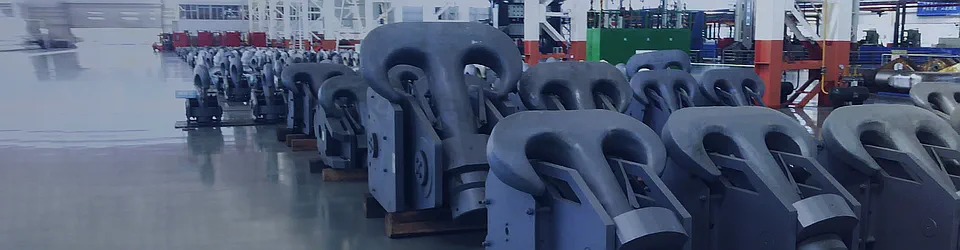
In the world of industrial lifting, the single forged hook is the workhorse that quietly keeps factories, ports, and construction sites moving. While double hooks and specialized rigging hardware grab attention for heavy-duty or complex lifts, the humble single hook handles the vast majority of day-to-day lifting operations across every industry. In this article, we dive into where single forged hooks are used, why they’re the preferred choice for so many applications, and the technical requirements that make them safe and reliable.
What Is a Forged Single Hook?
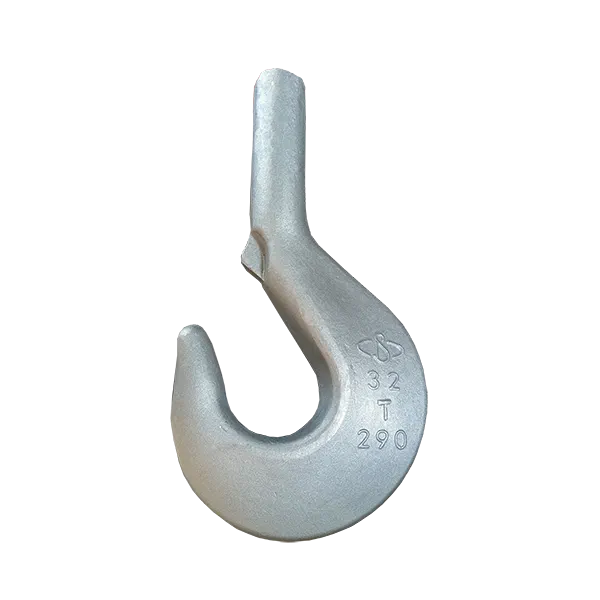
A forged single hook is a one-piece lifting component with a single curved hook body and a shank or eye for attachment. Unlike double hooks (which have two parallel hook openings sharing a common shank), the single hook has one load-bearing throat and saddle. It is drop-forged from alloy steel, heat-treated for optimal strength and toughness, and precision-machined to meet dimensional tolerances.
Single hooks come in two primary configurations:
- Shank-style single hooks: A straight shank with a threaded end, secured to a crane hook block via a hook nut and crossbeam. This is the standard configuration for overhead and gantry cranes.
- Eye-style single hooks: A looped eye at the top for direct attachment to shackles, chain slings, or wire rope assemblies. Common in rigging and hoist applications.
Where Are Forged Single Hooks Used?
Forged single hooks are the most widely used type of crane hook globally. Their simplicity, versatility, and cost-effectiveness make them the go-to choice for countless lifting scenarios.
1. Overhead Cranes (EOT Cranes)
This is the single hook’s most iconic application. Electric overhead traveling (EOT) cranes in factories, warehouses, and manufacturing plants almost universally use single hooks for their primary hoist. Whether it’s a 5-ton workshop crane moving raw materials or a 100-ton crane in a steel fabrication shop, the single hook is the standard lifting interface.
Why single hooks excel here: Overhead crane lifts typically involve a single lifting point — a sling set, a spreader beam, or a directly attached load. The single hook provides a clean, straightforward connection that’s easy to rig and unrig.
2. Gantry Cranes & Portal Cranes
Gantry cranes in shipyards, storage yards, and outdoor material handling facilities also rely heavily on single hooks. From small portable gantry cranes to massive rail-mounted gantry cranes, the single hook is the primary lifting attachment for general-purpose use.
3. Electric & Manual Hoists
Chain hoists, wire rope hoists, and lever hoists — whether electric, pneumatic, or manual — are almost always fitted with single hooks. The hook is typically integrated into the hoist’s load block or suspended directly from the chain or rope.
4. Factory & Warehouse Material Handling
In manufacturing plants, assembly lines, and distribution centers, single hooks handle everything from moving pallets and bins to positioning heavy machinery during installation. Their simplicity makes them ideal for frequent, routine lifting operations.
5. Construction Sites
On construction sites, single hooks on mobile cranes and tower cranes perform a wide range of lifts — steel beams, precast concrete elements, formwork, tools, and materials. The single hook’s versatility means it can adapt to whatever the day’s work requires.
6. Ports & Shipping (General Cargo)
While container cranes use specialized spreaders, general cargo cranes in ports — handling breakbulk cargo, heavy machinery, and project cargo — rely on single hooks with various sling configurations.
7. Mining & Heavy Industry
In mining operations, steel mills, and heavy manufacturing, single hooks on large-capacity cranes move ore buckets, ladles (in some configurations), and heavy equipment. For these applications, single hooks are often rated for 50 tons or more.
Single Hook vs. Double Hook: When to Choose Which
Understanding when a single hook is the right choice — and when a double hook is needed — is essential for proper rigging and crane specification.
| Factor | Single Hook | Double Hook |
|---|---|---|
| Load type | Uniform, single-point loads | Wide, asymmetrical, or dual-point loads |
| Capacity range | Typically 0.5t – 100t (up to 320t max) | 80t – 500t+ for heavy lifts |
| Load stability | Good for balanced loads | Superior for wide or unbalanced loads |
| Operational simplicity | Very simple, easy to rig | More complex, requires coordination |
| Space requirement | Compact, minimal headroom | Larger hook block, more headroom needed |
| Cost | Lower | Higher |
| Common applications | EOT cranes, hoists, general lifting | Steel mills, shipyards, heavy fabrication |
The rule of thumb: If your lift can be safely and efficiently done from a single lifting point, a single hook is almost always the right choice. It’s simpler, lighter, cheaper, and easier to maintain.
Technical Requirements for Forged Single Hooks
Forged single hooks are governed by a comprehensive set of international and regional standards that define every aspect of their design, materials, manufacturing, and testing.
1. Applicable Standards
Several key standards define the technical requirements for forged single hooks:
- DIN 15401 (Germany): The classic German standard specifically for single crane hooks. It defines hook geometry, material and forging requirements, dimensional compatibility with crane hook blocks, and stress calculation methods. DIN 15401 is widely adopted across Europe and globally.
- ISO 17440:2014 (International): Cranes — General design — Limit states and proof of competence of forged steel hooks. This is the overarching international standard covering design principles, material requirements, heat treatment, proof loading, and limit state verification (yield, ultimate, fatigue, brittle fracture).
- ISO 2415: Specifies dimensions, materials, and test methods for lifting hooks.
- EN 13001-3-5 (Europe): The European harmonized standard for crane hook design, covering both forged and cast hooks. It includes detailed hazard identification and limit state verification methods.
- ASME B30.10 (North America): The American Society of Mechanical Engineers standard for hooks, covering fabrication, use, inspection, and maintenance. It is the dominant reference in North America.
- GB/T 10051 (China): The Chinese national standard for forged lifting hooks, covering hooks from 0.25t to 320t across 15 capacity grades. It includes both single and double hook configurations.
- FEM Standards (Europe): European Materials Handling Federation standards commonly referenced in crane design.
2. Hook Classification & Grades
Forged single hooks are classified by several systems:
By strength grade (material mechanical properties):
- Grade M (Class 4): Medium strength, carbon steel
- Grade P (Class 5): Higher strength
- Grade S (Class 6): High-strength alloy steel
- Grade T (Class 8): Premium high-strength alloy steel — the most common for industrial crane hooks
- Grade V (Class 10) / Grade W: Very high strength, special alloy steels for extreme applications
By cross-section shape:
- Trapezoidal section: The traditional single hook profile, efficient for bending stress distribution
- T-section: Used in some designs for optimized stress distribution at the dangerous section
By hook number / size:
- Standards like DIN 15401 define hooks by “hook number” (e.g., No. 1.6, No. 5, No. 50, No. 250), where the number corresponds to the working load limit in tonnes.
- GB/T 10051 covers 15 capacity grades from 0.25t to 320t.
3. Key Dimensional Parameters
Every forged single hook is defined by a set of critical dimensions that must conform to standard tolerances:
- Hook opening (A): The width of the hook throat opening. Must be large enough to accept slings and shackles but not so large that loads can shift.
- Hook throat depth (B): The depth from the hook tip to the back of the throat. Determines how much load-bearing surface is available.
- Hook depth / overall height (C): Total vertical height from saddle to shank base.
- Shank diameter (D): The diameter of the straight shank portion. Must match the hook block’s crossbeam and nut dimensions.
- Saddle radius: The radius of the load-bearing seat at the bottom of the hook. Must match the minimum bend radius of the sling or chain being used.
- Thread dimensions: For shank-style hooks, the threaded end must meet standard thread specifications (e.g., DIN 15403 for hook nuts).
Example — A 20-ton forged single hook typically has approximate dimensions:
- Hook opening: 120 – 140 mm
- Throat depth: 190 – 220 mm
- Hook depth: 280 – 320 mm
- Shank diameter: 100 – 115 mm
4. Material Requirements
Forged single hooks are manufactured from high-quality carbon or alloy steels:
- Common materials: 35CrMo, 42CrMo, 34CrMo4, 40Cr, and similar chromium-molybdenum alloys
- Chemical composition: Strictly controlled to ensure hardenability, strength, and toughness
- Forging quality: Must be free of harmful inclusions, seams, and internal defects
- Grain flow: Must follow the hook contour for maximum fatigue resistance
5. Heat Treatment Requirements
All forged single hooks must undergo controlled heat treatment:
- Normalizing: Refines grain structure after forging
- Quenching and tempering (Q&T): Achieves the specified hardness and toughness balance
- Hardness range: Typically 200–300 HB (Brinell) depending on grade — hard enough for strength and wear resistance, but not so hard as to be brittle
- Temperature uniformity: The entire hook must reach uniform temperature during heat treatment to avoid property variations
6. Safety Factor
All major standards require a minimum safety factor of:
- ≥ 4:1 based on yield strength — the hook can withstand at least four times its rated working load before reaching the yield point (permanent deformation).
- Many manufacturers design to a higher safety factor of 5:1 or greater for additional margin.
7. Safety Latch Requirement
Modern single hooks must be equipped with a safety latch (also called a hook keeper or spring latch) to prevent accidental load disengagement. This is mandated by:
- OSHA regulations in the United States
- Most European safety directives
- ASME B30.10 and ISO standards
Latch options include:
- Standard spring-loaded latches
- Positive-locking latches for high-vibration environments
- Heavy-duty latches for severe service conditions
8. Testing & Inspection Requirements
Before a single hook leaves the factory, it must pass:
- Proof load testing: Loaded to 125%–200% of WLL to verify structural integrity
- Magnetic particle testing (MT): 100% inspection for surface and near-surface cracks
- Ultrasonic testing (UT): Inspection for internal defects
- Hardness testing: Verification of proper heat treatment
- Dimensional inspection: Verification of all critical dimensions
- Visual inspection: Surface finish, marking quality, and overall condition
9. Marking Requirements
Every single hook must be permanently marked with:
- Working Load Limit (WLL)
- Material grade or class
- Manufacturer’s identification
- Heat / batch number for traceability
- Standard reference or certification mark
Selecting the Right Single Hook
When specifying a forged single hook, consider these key factors:
- Working Load Limit (WLL): Always select a hook with a WLL at or above the maximum expected load. Never use a hook below its rated capacity with the expectation of “safety margin” absorbing overloads.
- Standard compliance: Ensure the hook meets the standard applicable to your region and industry (DIN, ISO, EN, ASME, GB/T, etc.).
- Attachment type: Shank-style for crane hook blocks, eye-style for slings and shackles.
- Material grade: Match the grade to your application — higher grades for heavier loads or more severe duty cycles.
- Safety latch: Specify the appropriate latch type for your operating environment.
- Environmental conditions: Consider corrosion (stainless steel or special coatings for marine/chemical environments), temperature extremes, and abrasion.
Conclusion: The Indispensable Single Hook
The forged single hook may not be the flashiest piece of lifting equipment, but it is undoubtedly the most essential. From the smallest workshop hoist to the largest overhead crane, single hooks do the heavy lifting that keeps industry moving. Their simplicity is their strength — a single, robust, forged steel component that has been refined over decades of engineering to deliver unmatched reliability.
Understanding the technical requirements behind these hooks — the standards, the materials, the testing — is what separates safe lifting from a potential disaster. When you choose a properly specified, certified forged single hook, you’re choosing a component that has been designed, forged, heat-treated, and tested to perform safely, day in and day out, for years to come.
The rule of thumb: If your lift can be safely and efficiently done from a single lifting point, a single hook is almost always the right choice. It’s simpler, lighter, cheaper, and easier to maintain.
Technical Requirements for Forged Single Hooks
Forged single hooks are governed by a comprehensive set of international and regional standards that define every aspect of their design, materials, manufacturing, and testing.
1. Applicable Standards
Several key standards define the technical requirements for forged single hooks:
- DIN 15401 (Germany): The classic German standard specifically for single crane hooks. It defines hook geometry, material and forging requirements, dimensional compatibility with crane hook blocks, and stress calculation methods. DIN 15401 is widely adopted across Europe and globally.
- ISO 17440:2014 (International): Cranes — General design — Limit states and proof of competence of forged steel hooks. This is the overarching international standard covering design principles, material requirements, heat treatment, proof loading, and limit state verification (yield, ultimate, fatigue, brittle fracture).
- ISO 2415: Specifies dimensions, materials, and test methods for lifting hooks.
- EN 13001-3-5 (Europe): The European harmonized standard for crane hook design, covering both forged and cast hooks. It includes detailed hazard identification and limit state verification methods.
- ASME B30.10 (North America): The American Society of Mechanical Engineers standard for hooks, covering fabrication, use, inspection, and maintenance. It is the dominant reference in North America.
- GB/T 10051 (China): The Chinese national standard for forged lifting hooks, covering hooks from 0.25t to 320t across 15 capacity grades. It includes both single and double hook configurations.
- FEM Standards (Europe): European Materials Handling Federation standards commonly referenced in crane design.
2. Hook Classification & Grades
Forged single hooks are classified by several systems:
By strength grade (material mechanical properties):
- Grade M (Class 4): Medium strength, carbon steel
- Grade P (Class 5): Higher strength
- Grade S (Class 6): High-strength alloy steel
- Grade T (Class 8): Premium high-strength alloy steel — the most common for industrial crane hooks
- Grade V (Class 10) / Grade W: Very high strength, special alloy steels for extreme applications
By cross-section shape:
- Trapezoidal section: The traditional single hook profile, efficient for bending stress distribution
- T-section: Used in some designs for optimized stress distribution at the dangerous section
By hook number / size:
- Standards like DIN 15401 define hooks by “hook number” (e.g., No. 1.6, No. 5, No. 50, No. 250), where the number corresponds to the working load limit in tonnes.
- GB/T 10051 covers 15 capacity grades from 0.25t to 320t.
3. Key Dimensional Parameters
Every forged single hook is defined by a set of critical dimensions that must conform to standard tolerances:
- Hook opening (A): The width of the hook throat opening. Must be large enough to accept slings and shackles but not so large that loads can shift.
- Hook throat depth (B): The depth from the hook tip to the back of the throat. Determines how much load-bearing surface is available.
- Hook depth / overall height (C): Total vertical height from saddle to shank base.
- Shank diameter (D): The diameter of the straight shank portion. Must match the hook block’s crossbeam and nut dimensions.
- Saddle radius: The radius of the load-bearing seat at the bottom of the hook. Must match the minimum bend radius of the sling or chain being used.
- Thread dimensions: For shank-style hooks, the threaded end must meet standard thread specifications (e.g., DIN 15403 for hook nuts).
Example — A 20-ton forged single hook typically has approximate dimensions:
- Hook opening: 120 – 140 mm
- Throat depth: 190 – 220 mm
- Hook depth: 280 – 320 mm
- Shank diameter: 100 – 115 mm
4. Material Requirements
Forged single hooks are manufactured from high-quality carbon or alloy steels:
- Common materials: 35CrMo, 42CrMo, 34CrMo4, 40Cr, and similar chromium-molybdenum alloys
- Chemical composition: Strictly controlled to ensure hardenability, strength, and toughness
- Forging quality: Must be free of harmful inclusions, seams, and internal defects
- Grain flow: Must follow the hook contour for maximum fatigue resistance
5. Heat Treatment Requirements
All forged single hooks must undergo controlled heat treatment:
- Normalizing: Refines grain structure after forging
- Quenching and tempering (Q&T): Achieves the specified hardness and toughness balance
- Hardness range: Typically 200–300 HB (Brinell) depending on grade — hard enough for strength and wear resistance, but not so hard as to be brittle
- Temperature uniformity: The entire hook must reach uniform temperature during heat treatment to avoid property variations
6. Safety Factor
All major standards require a minimum safety factor of:
- ≥ 4:1 based on yield strength — the hook can withstand at least four times its rated working load before reaching the yield point (permanent deformation).
- Many manufacturers design to a higher safety factor of 5:1 or greater for additional margin.
7. Safety Latch Requirement
Modern single hooks must be equipped with a safety latch (also called a hook keeper or spring latch) to prevent accidental load disengagement. This is mandated by:
- OSHA regulations in the United States
- Most European safety directives
- ASME B30.10 and ISO standards
Latch options include:
- Standard spring-loaded latches
- Positive-locking latches for high-vibration environments
- Heavy-duty latches for severe service conditions
8. Testing & Inspection Requirements
Before a single hook leaves the factory, it must pass:
- Proof load testing: Loaded to 125%–200% of WLL to verify structural integrity
- Magnetic particle testing (MT): 100% inspection for surface and near-surface cracks
- Ultrasonic testing (UT): Inspection for internal defects
- Hardness testing: Verification of proper heat treatment
- Dimensional inspection: Verification of all critical dimensions
- Visual inspection: Surface finish, marking quality, and overall condition
9. Marking Requirements
Every single hook must be permanently marked with:
- Working Load Limit (WLL)
- Material grade or class
- Manufacturer’s identification
- Heat / batch number for traceability
- Standard reference or certification mark
Selecting the Right Single Hook
When specifying a forged single hook, consider these key factors:
- Working Load Limit (WLL): Always select a hook with a WLL at or above the maximum expected load. Never use a hook below its rated capacity with the expectation of “safety margin” absorbing overloads.
- Standard compliance: Ensure the hook meets the standard applicable to your region and industry (DIN, ISO, EN, ASME, GB/T, etc.).
- Attachment type: Shank-style for crane hook blocks, eye-style for slings and shackles.
- Material grade: Match the grade to your application — higher grades for heavier loads or more severe duty cycles.
- Safety latch: Specify the appropriate latch type for your operating environment.
- Environmental conditions: Consider corrosion (stainless steel or special coatings for marine/chemical environments), temperature extremes, and abrasion.
Conclusion: The Indispensable Single Hook
The forged single hook may not be the flashiest piece of lifting equipment, but it is undoubtedly the most essential. From the smallest workshop hoist to the largest overhead crane, single hooks do the heavy lifting that keeps industry moving. Their simplicity is their strength — a single, robust, forged steel component that has been refined over decades of engineering to deliver unmatched reliability.
Understanding the technical requirements behind these hooks — the standards, the materials, the testing — is what separates safe lifting from a potential disaster. When you choose a properly specified, certified forged single hook, you’re choosing a component that has been designed, forged, heat-treated, and tested to perform safely, day in and day out, for years to come.